Race entry fees, flights, hotels, shoes, gels — a single marathon weekend can easily cost more than a month of groceries. Pro athletes have sponsors to cover that. Amateurs usually don't, and most "how to get sponsored" advice assumes you already have 50,000 followers.
You don't need them. Brands pay for attention in the real world, and a big race is exactly that: tens of thousands of runners, spectators lining the course, finish-line photographers and everyone scrolling race-day posts afterwards.
This guide covers the three realistic ways an amateur gets sponsored, and how to do the third one in about ten minutes.
Why brands care about amateur runners
A logo on a pro's jersey is seen on TV. A logo on your shirt is seen by the people standing a metre away — for hours. For a local running shop, a new energy-gel brand, a startup that wants a funny story on social media or a business that just sponsors a friend, that's a cheap and memorable placement.
What they're buying is simple:
- A place — the race, the date, the city.
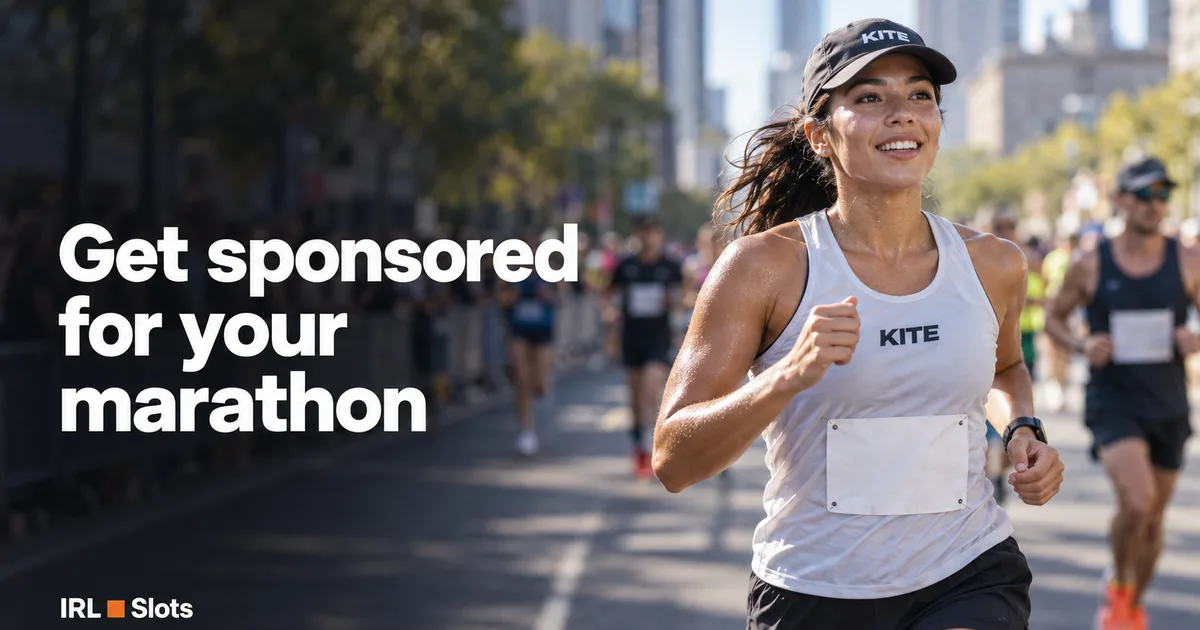
- A spot — chest, back, cap, bib area, calves, a flag you carry across the finish.
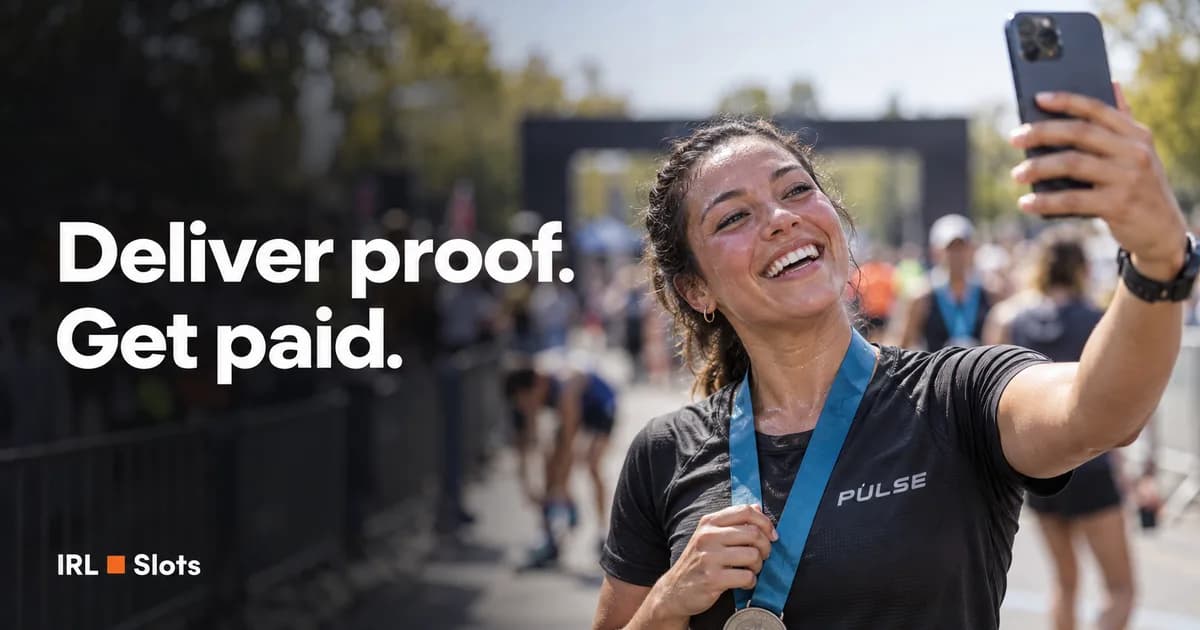
- Proof — photos or a short video of the logo during the race.
If you can offer those three things clearly, you're sponsorable.
Option 1: Ask a local business directly
Running shops, physiotherapists, cafés near the course and gyms sometimes support local runners. Bring a one-page offer: which race, where the logo goes, how many photos you'll post, and a price. Expect a lot of "no" and some "yes, here's a free pair of shoes".
Good for: gear, small amounts, long-term relationships. Downside: slow, one conversation at a time, and awkward to negotiate.
Option 2: Charity and crowdfunding
Many big marathons have charity places, and crowdfunding covers your entry fee in exchange for running for a cause. It works — but the money goes to the charity or your costs, not to you, and it's not a sponsorship.
Option 3: Auction ad space on your race kit
This is what IRLSlots is for. You list the race and the spots on your kit, set a starting price, and brands bid on them. When the auction ends, the highest bid wins, the brand sends its logo (or the actual shirt, stickers or temporary tattoo), you wear it on race day and post the proof you promised.
- Free for you. Creators keep 100% of the winning bid. The advertiser pays a small service fee on top, and only if they win.
- One race, one deal. No contracts, no year-long commitments.
- Paid through Stripe to your own account once the placement is delivered.
Step-by-step instructions are in How to sell ad space on yourself at an event.
What to offer on your kit
Think like the brand: what will be clearly visible in photos?
- Front of the shirt — the most valuable spot, visible in every finish-line photo.
- Back of the shirt — seen by every runner behind you for 42 km.
- Cap or visor — visible in close-ups and selfies.
- Calves or arms — temporary tattoos, great for close-up shots.
- A flag or sign you carry across the finish line.
Measure each spot in centimetres. A clear size and a photo of you in the kit sell much better than "anywhere on my body".
How to price it
There's no universal price list — the market decides. Start low enough to get the first bid and let the auction do the rest. Our pricing guide explains what pushes the price up: the size of the race, how visible the spot is, and how good your proof plan is.
Promise proof you can actually deliver
On race day you'll be tired, sweaty and focused on your pace. Keep the proof plan realistic:
- 2–3 photos before the start with the logo clearly visible,
- a short video after the finish,
- official race photos (most races sell them — buy yours and add them).
Buyers see your proof plan before they bid, and you're held to it. A small promise kept beats a big promise missed. See How to deliver proof and get paid.
Rules to check before you race
- Race rules. Some elite fields and championship races restrict commercial logos. Most mass-participation races don't mind on your own clothing — but check.
- Bib visibility. Never cover your bib number with a logo.
- Taxes and visas. Money from sponsorship is income. If the race is abroad, make sure you're allowed to do paid activity there — a tourist visa or visa waiver often isn't enough.
Quick checklist
- Pick a race at least 2–3 weeks away (so a brand has time to ship items).
- Take a clear photo of yourself in your race kit.
- Choose 1–5 spots and measure them.
- Set a starting price and a proof plan you can deliver.
- Connect payouts (how) and publish.